Laser and Skin Clinics
Laser Safety Procedures for Aesthetic Clinics
Laser safety procedures for aesthetic clinics: roles, controlled treatment rooms, eyewear, training records, incidents and client checks. A practical framework.
Key takeaways
- Write your laser safety procedures down, name a responsible person, and make sure every operator has read and signed them.
- Control the treatment room: restricted entry, warning signs, suitable eyewear for everyone present, and no reflective hazards.
- Keep training, authorisation, and incident records as carefully as client records.
- Who may operate which device, and what training is required, varies by province and modality — confirm it with your regulators and the manufacturer.
Lasers and intense pulsed light (IPL) devices are powerful tools, and the risks — eye injuries, burns, fire, and unintended skin reactions — are well known. Clear laser safety procedures for aesthetic clinics don't just protect clients; they protect your operators, your front desk staff who might walk into a treatment room, and the business itself.
This guide sets out a practical framework for writing and running your clinic's laser safety procedures. It's not a substitute for device-specific training, the manufacturer's instructions, or the rules of your province and professional college, which take priority over anything here.
Assign responsibility for laser safety
Safety procedures work best when someone owns them. Many clinics name a laser safety lead (sometimes called a laser safety officer) who is responsible for keeping procedures current, checking training, and investigating incidents. In a small clinic this may be the owner or clinical lead; the title matters less than the clarity.
- Laser safety lead: maintains the written procedures, the equipment log, and training records.
- Clinical lead or supervising practitioner: sets clinical protocols, client suitability criteria, and treatment parameters.
- Operators: follow procedures, complete pre-use checks, and report faults and incidents.
- Front desk and other staff: know which rooms are controlled and never enter during treatment.
Set up a controlled treatment area
Each room where a laser or IPL device is used should be treated as a controlled area while the device is on. The details depend on your device and your safety assessment, but the principles are consistent.
Controlled-area basics
- Entry restricted to the operator, the client, and anyone else authorised and wearing suitable eyewear.
- Warning signs on the door, displayed when the device is in use, as recommended by the manufacturer.
- Windows covered where the device's light could pass through, according to your safety assessment.
- Reflective surfaces such as mirrors, jewellery, and shiny instruments removed or covered.
- Fire precautions in place, including awareness of flammable materials and products used on the skin.
- The device secured when not in use so it can't be switched on by unauthorised people.
Think about everyone who might enter the room, not just the operator. Cleaners, new staff, a client's companion, or a colleague looking for supplies can all walk in mid-treatment. A simple rule — no one opens a controlled-room door while the warning sign is displayed, and the operator pauses the device if anyone does — is easier to follow than a long list of exceptions. Include it in every new starter's induction, whatever their role.
Protective eyewear
Eye protection is one of the most important controls. Eyewear must be suitable for the specific wavelength and output of each device, which is why the manufacturer's specifications matter.
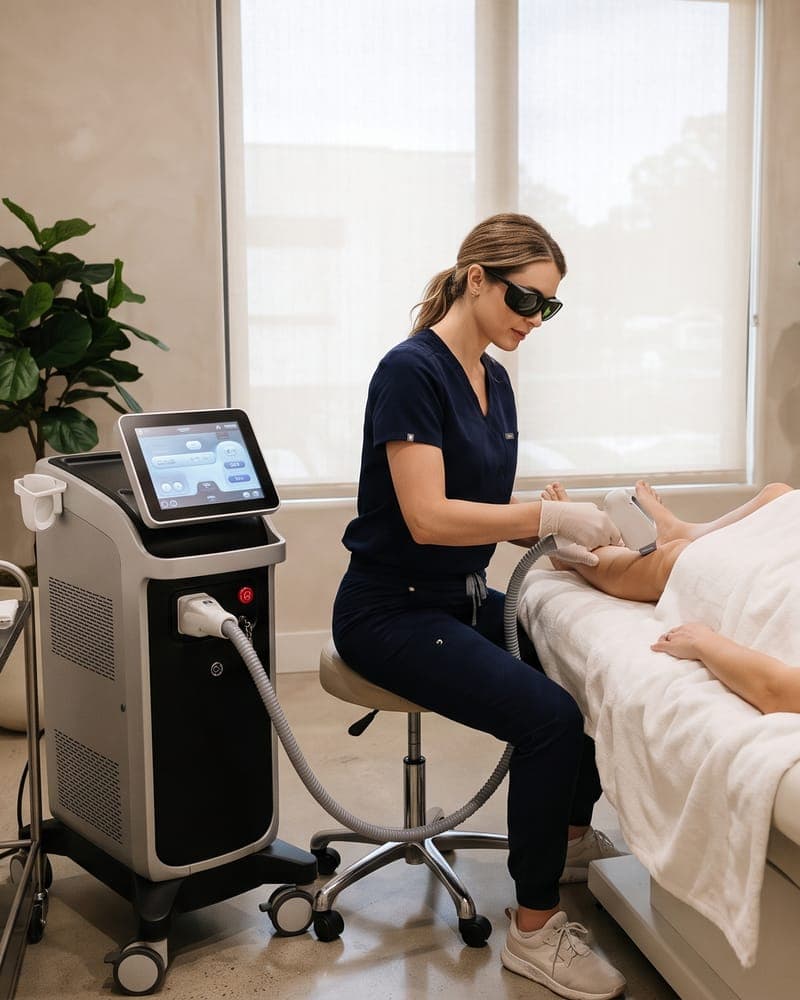
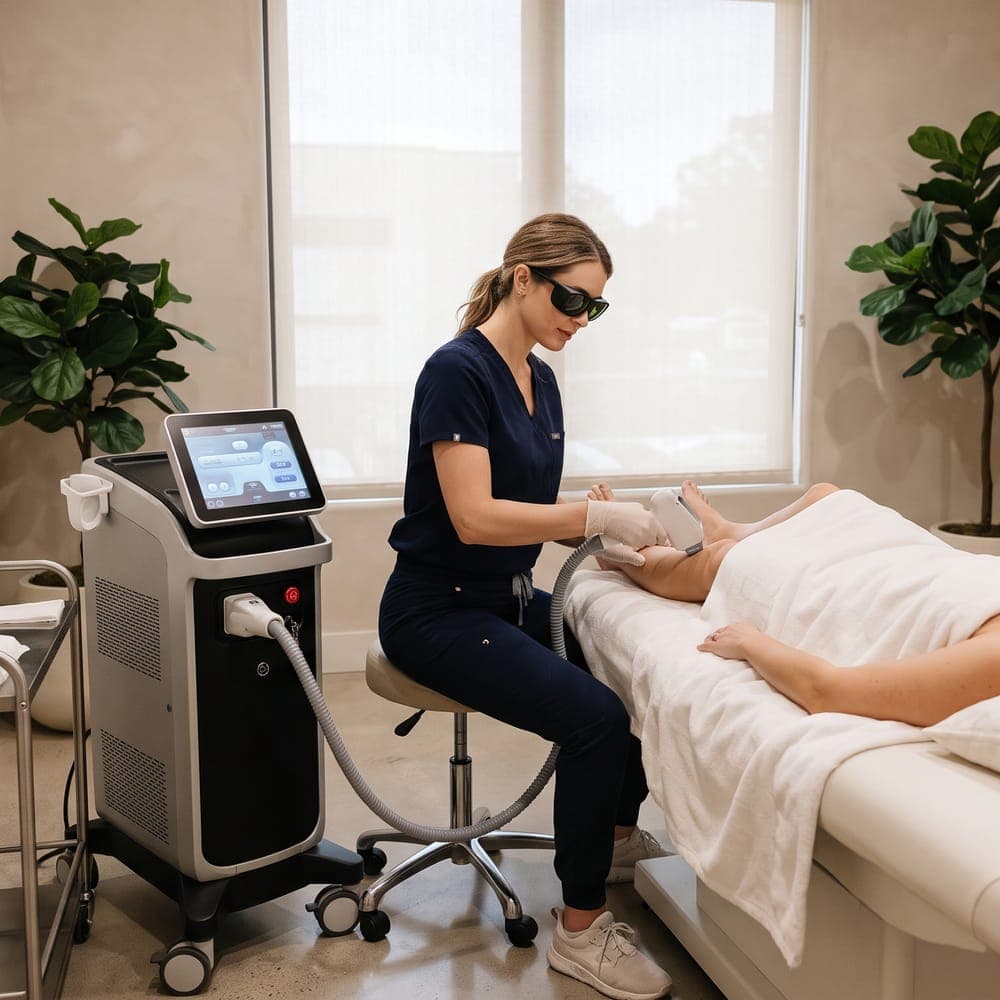
- Provide eyewear specified for each device for the operator, the client, and any observer.
- Label eyewear clearly by device so the wrong pair isn't picked up in a busy room.
- Inspect eyewear regularly for scratches and damage, and replace it as the manufacturer recommends.
- Clean eyewear between clients in line with your infection prevention procedures.
- Never assume one pair of goggles works with every device in the clinic.
Training and authorisation records
Every operator should be trained on each device they use and authorised by the clinic to use it. Keep a record for each person that you can produce on request.
- The operator's qualifications and professional registration, where relevant.
- Device-specific training completed, with dates and the trainer or course provider.
- Any supervised treatments or competency sign-off required by your clinic.
- Confirmation the operator has read and signed your written laser safety procedures.
- Refresher training dates and when the next refresher is due.
Your booking system should reflect these authorisations, so a client can't be booked with an operator who isn't approved for that device. Our guide on organizing laser hair removal treatment courses covers scheduling around devices and trained staff.
Client safety checks before treatment
Laser safety also covers the client in the chair. Your clinical lead should define what is checked before each treatment and what makes a client unsuitable on the day. Operationally, make sure the checks happen every time and are recorded.
- Confirm the client's identity and the treatment booked.
- Review the medical history and any updates since the last visit, using your intake form.
- Confirm valid, documented consent for the treatment.
- Record the skin assessment your protocols require, such as skin type and recent sun exposure — see our guide to recording Fitzpatrick skin type and skin assessments.
- Carry out any test patch your protocol or the manufacturer requires, and record the result.
- Record the device, settings used, and operator in the client's treatment notes.
Device checks and maintenance
A device that isn't maintained properly is a safety risk. Run the manufacturer's pre-use checks, keep a dated service history, and take any faulty device out of use immediately. We cover this in detail in keeping a laser equipment maintenance log.
Incidents, adverse events, and near misses
Even well-run clinics have incidents. What matters is a calm, consistent response and a record that lets you learn from it.
Your incident procedure should cover
- Immediate first aid and when to seek urgent medical care, as set by your clinical lead.
- Stopping the device and taking it out of service if a fault may be involved.
- Recording what happened, when, who was involved, and the device and settings used.
- Informing the clinical lead and following up with the client.
- Any reporting obligations to the manufacturer, Health Canada, your college, or your insurer.
- Reviewing near misses as well as incidents, and updating procedures where needed.
Review your laser safety procedures regularly
Procedures go stale when devices, staff, or rooms change. Review them at least once a year, and also whenever you add a device, move a treatment room, hire new operators, or have an incident. Record each review, what changed, and who approved it.
How software can help
Software won't run your safety programme, but it can support it. In MedClinora, digital forms collect intake and consent before the visit, client records keep a consent and treatment-photo timeline alongside treatment notes, and the calendar can block device time for servicing. The team inbox helps make sure a client's message about a reaction reaches the right person quickly. See the features page.
Does an aesthetic clinic need a laser safety officer?
It depends on your province, profession, and setting. Even where it isn't formally required, naming one responsible person for laser safety is good practice. Check with your regulators and your device manufacturer.
Do clients need to wear protective eyewear during laser hair removal?
Eye protection suitable for the device is a standard control for everyone in the treatment room. The manufacturer specifies the type required for each device.
Who is allowed to perform laser treatments in Ontario?
It depends on the treatment, the device, and whether a regulated health professional is involved. Ask your professional college and local public health unit, as the answer differs between settings.
How often should laser safety procedures be reviewed?
At least annually, and whenever you add a device, change treatment rooms, take on new operators, or have an incident or near miss.
Good laser safety is mostly about consistency: the same checks, the same room setup, and the same records, every time. Write your procedures down, train to them, and review them when anything changes. For related reading, see how to keep laser and skin clinic client records.
Sources and further reading
- Health Canada — Medical devices (opens in a new tab)
- Health Canada — Laser hair removal: safety guidelines for facility owners and operators (2011) (opens in a new tab)
- Ontario — O. Reg. 136/18: Personal Service Settings (opens in a new tab)
- College of Physicians and Surgeons of Ontario (opens in a new tab)
- College of Nurses of Ontario (opens in a new tab)
- Canadian Centre for Occupational Health and Safety (opens in a new tab)
General information only. This article is educational and isn’t legal, tax, financial, or clinical advice. Requirements depend on your province, your professional college, your role, and the treatments you offer — confirm them with the relevant regulator or a qualified adviser.