Clinic Technology and AI
AI Receptionists for Medical Spas: What They Can and Can't Do
AI receptionists for medical spas: what they can and can't do, where they help the front desk, the privacy questions to ask, and how to roll one out safely.
Key takeaways
- AI receptionists are good at routine, repetitive front desk work: answering common questions, helping with bookings, and capturing messages after hours.
- They should never give clinical advice, and every setup needs a clear, quick hand-over to a person.
- Before switching one on, check how the tool handles personal and health information and get privacy advice.
- Start small, review conversations regularly, and expand only what's working.
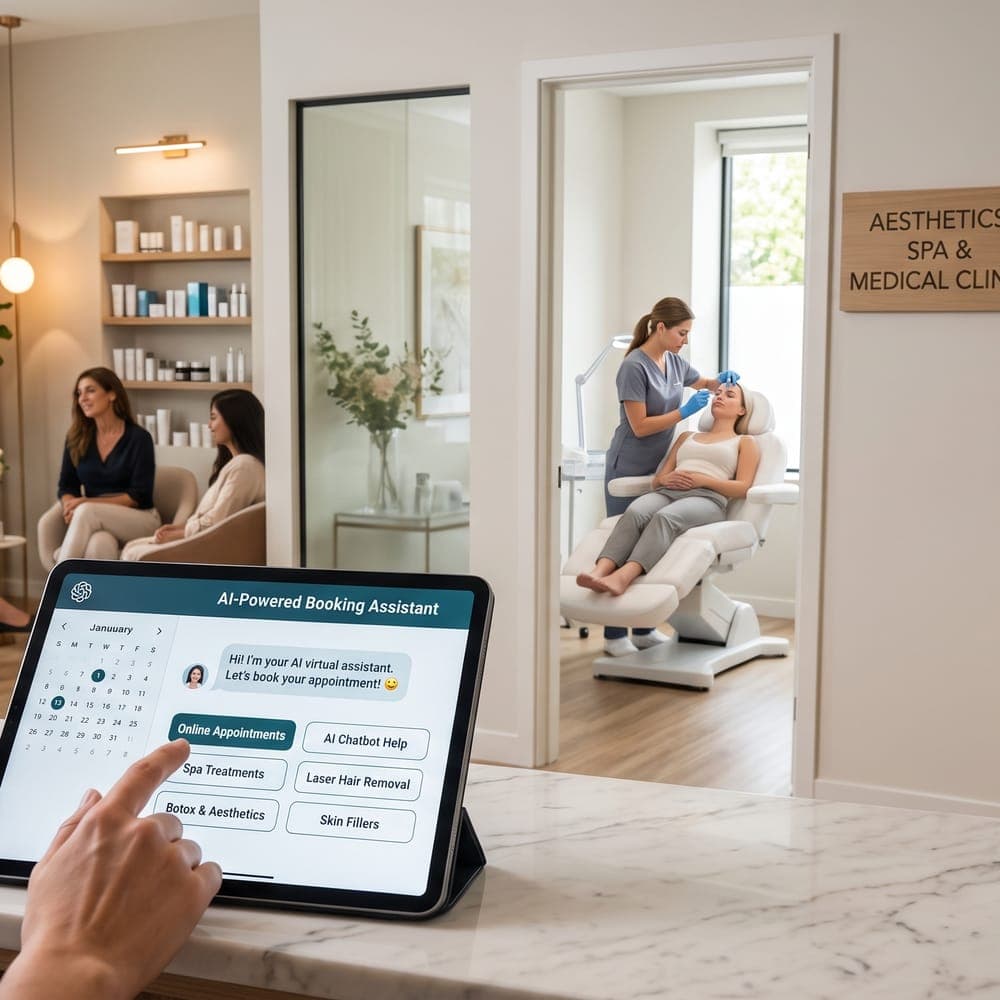
Phones ring during treatments, website chats arrive after closing, and the same questions about prices, parking, and preparation come up all day. That's why many clinics are looking at AI receptionists for medical spas. Understanding what they can and can't do is the difference between a useful assistant that frees up your front desk and a tool that frustrates clients or creates privacy risks.
This guide is vendor-neutral. It explains what an AI receptionist typically does, where the limits are, and how to set one up responsibly in a Canadian clinic.
What an AI receptionist is
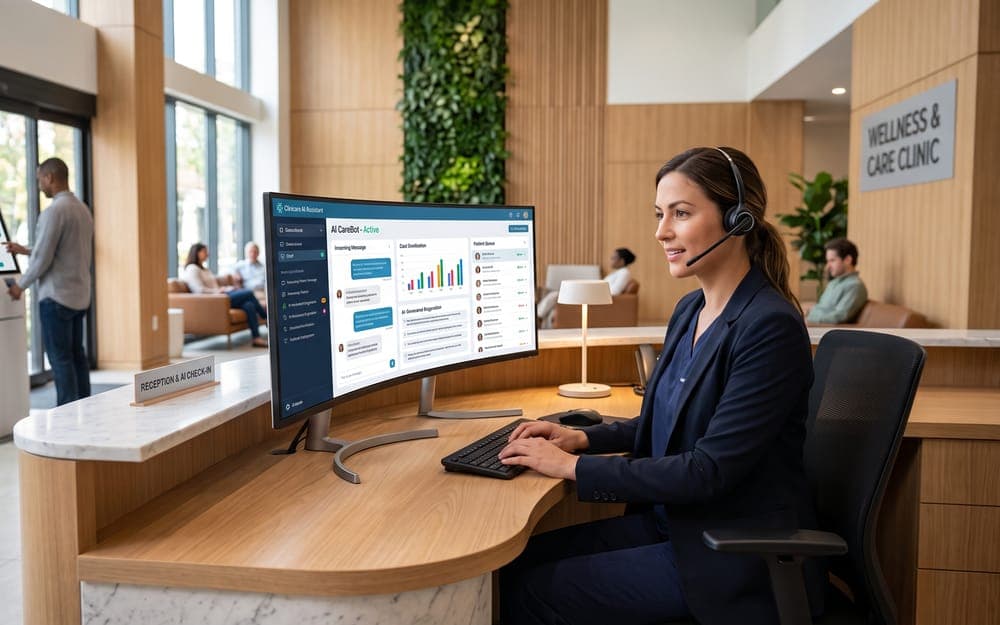
An AI receptionist is software that answers clients in natural language, by phone, website chat, or messaging, using information you provide about your clinic. It can usually understand a question, give an answer drawn from your approved content, and take an action such as offering appointment times or passing a message to staff.
- AI chat on your website answers typed questions.
- A booking assistant helps clients find and book a suitable time.
- An AI voice receptionist answers phone calls, often after hours or when the line is busy.
What an AI receptionist can do well
AI receptionists are strongest with predictable, repetitive work where the answer is the same for everyone.
- Answering common questions: hours, location, parking, services offered, and how to book.
- Sharing approved, general information such as starting prices or what a consultation involves.
- Helping clients find an available time and book or request an appointment.
- Taking messages and contact details after hours, so nothing is lost.
- Pointing clients to forms, policies, or the right page on your website.
- Routing enquiries to the right person on your team.
The common thread is that the clinic decides the answers in advance. The assistant's job is to find the right approved answer quickly and deliver it politely, at any hour, so your team can spend their time on the conversations that need a person. For a small clinic, the biggest gain is often simply that after-hours enquiries get a reply and a booking path instead of silence until the next morning.
What an AI receptionist can't (and shouldn't) do
The limits matter as much as the capabilities, especially in a health-adjacent business.
- Give clinical advice. It shouldn't assess suitability, recommend treatments for a specific person, or interpret symptoms.
- Handle urgent concerns. A client describing a reaction after treatment must be directed to a person or to emergency services straight away.
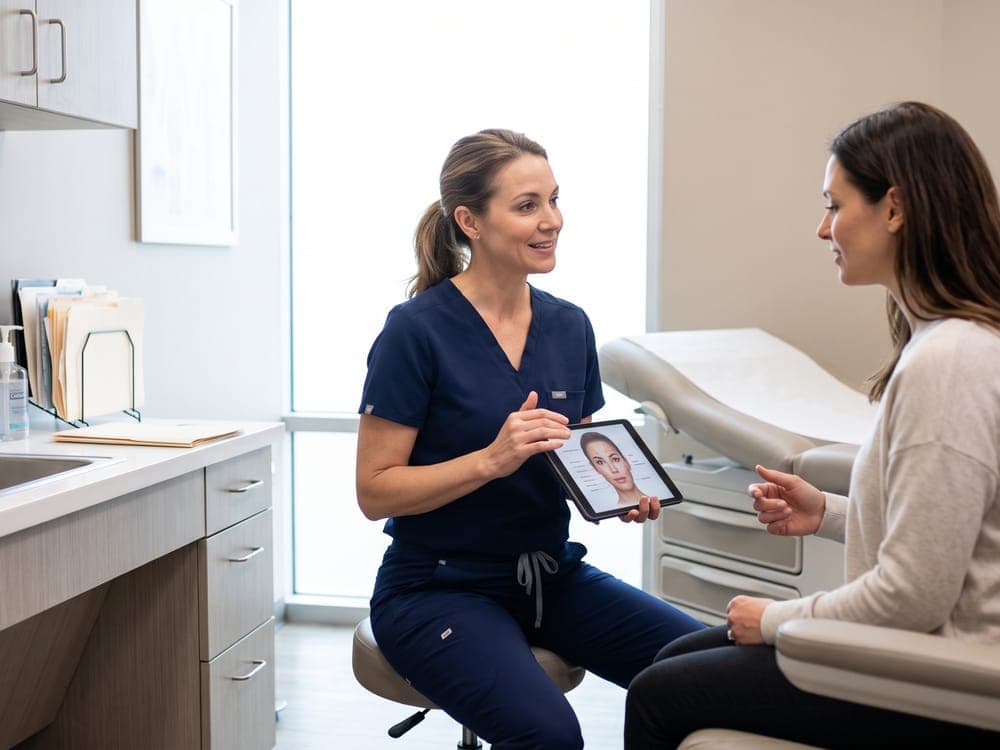
- Replace consultation and consent. Those require a qualified practitioner.
- Negotiate exceptions. Refunds, policy exceptions, and complaints belong with staff.
- Guarantee accuracy. AI can misunderstand or get things wrong, so answers need to be grounded in content you control and reviewed regularly.
Design the hand-over to staff first
A good AI receptionist knows when to stop. Before anything else, decide how and when conversations pass to a person. The hand-over should carry the conversation so far, so the client doesn't have to repeat themselves, and it should land somewhere your team actually checks.
Hand-over rules to define
- Any clinical question, including questions about suitability or side effects.
- Anything that sounds urgent or describes a problem after treatment.
- Complaints, refund requests, and policy exceptions.
- Any time the client asks for a person.
- Any question the assistant can't answer confidently from your approved content.
- Who receives the hand-over, how quickly they respond, and what the client is told in the meantime.
Privacy questions to ask about any AI receptionist
Clients may share personal details, and sometimes health information, without being asked. Before choosing a tool, find out exactly what happens to that information.
- What information does the assistant collect, and can you limit it?
- Where is conversation data stored and processed, and for how long?
- Is client data used to train the vendor's AI models? Can you opt out?
- Who at the vendor can access conversations?
- How are recordings and transcripts secured, and can you delete them?
- How are clients told they're talking to AI, and that calls may be recorded?
How to roll out an AI receptionist safely
- Write the approved content first: services, hours, policies, starting prices, and booking rules.
- Start with one channel, such as website chat, before adding phone calls.
- Limit the first version to answering questions and taking messages, then add booking.
- Test it with tricky questions, including clinical and urgent ones, to check that it hands over.
- Review conversations weekly at first, and correct content where answers were wrong or unclear.
- Track whether it's helping: unanswered enquiries, after-hours bookings, and staff time saved.
For more on using AI with clients, see our guide to AI for marketing and patient communication.
Common mistakes with AI receptionists
- Letting it improvise. An assistant that answers from general internet knowledge rather than your approved content is more likely to say something wrong about your services or policies.
- Hiding that it's automated. Clients generally accept an assistant when they know what it is; they feel misled when they find out later.
- No owner on the team. Someone needs to be responsible for reviewing conversations and updating content when prices, hours, or services change.
- Slow hand-overs. Passing a conversation to staff only helps if someone replies promptly. Set expectations for response times and tell clients what they are.
- Switching everything on at once. Phone, chat, and booking all at once makes problems harder to spot and fix.
Remember too that an AI receptionist reflects your clinic's tone. Write approved answers in the same warm, clear voice your front desk uses, and keep them short. Clients asking about parking don't want three paragraphs.
Where MedClinora fits
On plans that include it, MedClinora offers AI chat, a booking assistant, and an AI voice receptionist that answer routine questions from your clinic's information, help clients book through online booking, and hand conversations over to your team inbox when a person is needed. They don't give clinical advice. See the features page for details.
Can an AI receptionist book appointments for a med spa?
Many can help clients find a time and book or request an appointment, following the booking rules you set. Bookings that need a consultation or approval should still go through your normal process.
Will an AI receptionist replace my front desk staff?
It's better seen as support. It can handle routine questions and after-hours enquiries, but people are still needed for clinical questions, complaints, check-in, payments, and building relationships with clients.
Is it safe to use AI with medical spa clients?
It can be, with the right setup: clear limits on clinical topics, a reliable hand-over to staff, transparency with clients, and privacy safeguards checked with a professional.
What happens if a client tells the AI about a reaction after treatment?
The assistant should be configured to stop, tell the client how to reach a person or emergency services, and flag the conversation to staff immediately. Test this before going live.
AI receptionists can take a real load off a busy front desk, as long as they stick to routine work and hand everything else to people. Start narrow, protect client privacy, and review often. For related reading, see what to look for in a medical spa CRM and medical spa front desk procedures.
Sources and further reading
- Ontario — Personal Health Information Protection Act, 2004 (opens in a new tab)
- Office of the Privacy Commissioner of Canada — PIPEDA (opens in a new tab)
- Information and Privacy Commissioner of Ontario (opens in a new tab)
- College of Physicians and Surgeons of Ontario (opens in a new tab)
- College of Nurses of Ontario (opens in a new tab)
General information only. This article is educational and isn’t legal, tax, financial, or clinical advice. Requirements depend on your province, your professional college, your role, and the treatments you offer — confirm them with the relevant regulator or a qualified adviser.