Medical Spa Management
Medical Spa Front Desk Procedures: A Practical Playbook
Front desk procedures and scripts for a medical spa: opening and closing routines, booking calls, check-in, payments, privacy, and handling tricky questions.
Key takeaways
- Written front desk procedures make the client experience consistent, whoever is on shift.
- Scripts should guide tone and cover key information — not make staff sound robotic.
- The front desk books and informs; clinical questions always go to a qualified practitioner.
- Privacy at reception matters: lower your voice, protect screens, and avoid naming treatments in public.
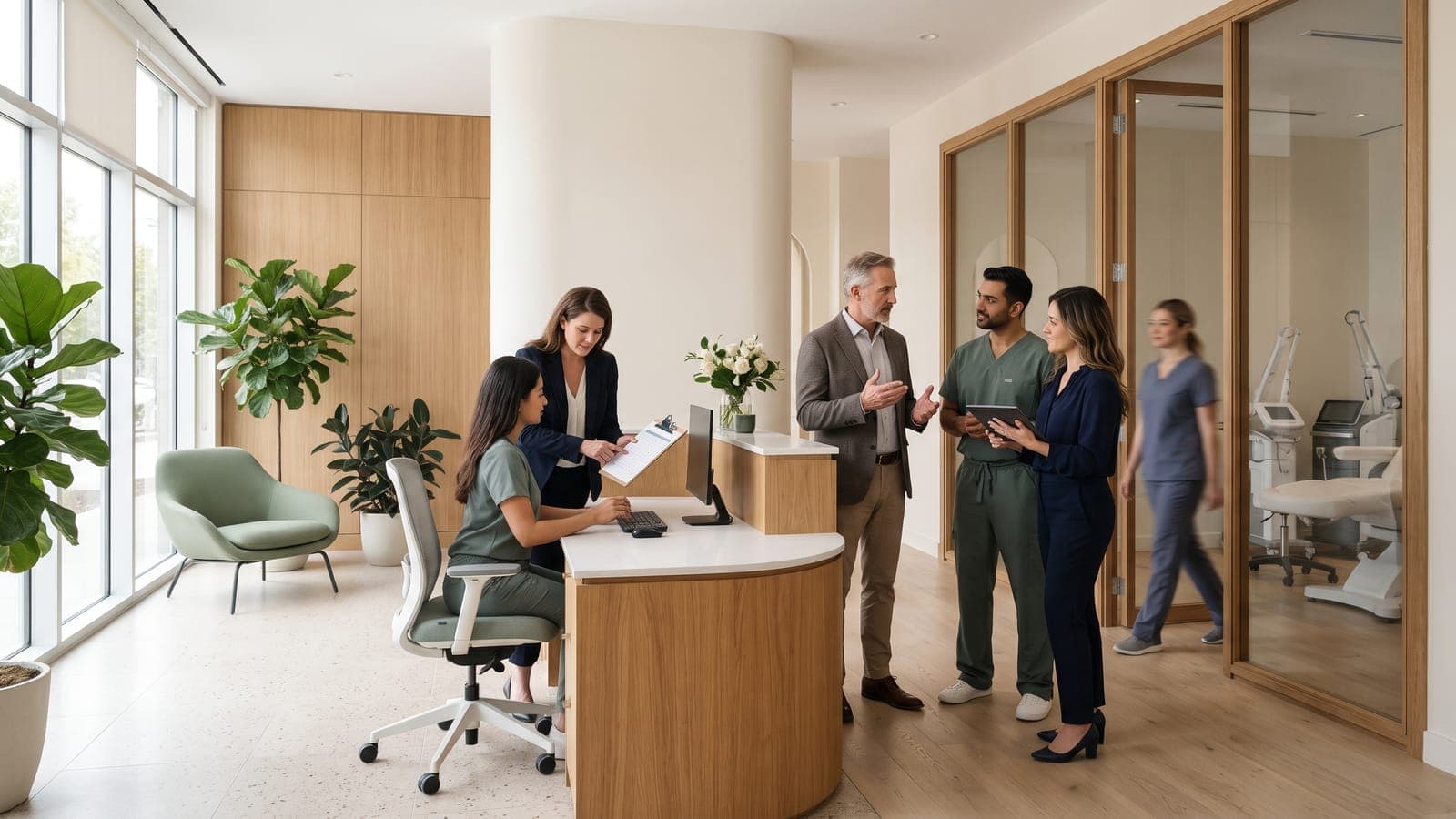
The med spa front desk shapes how clients feel about your clinic before a practitioner ever sees them. Clear front desk procedures and scripts for a medical spa help every receptionist answer the phone the same way, book the right appointment, collect the right forms, and handle awkward moments calmly — even on their first week.
This playbook covers the daily routines, booking conversations, check-in and checkout, and the boundaries your front desk team should know. Adapt the scripts to your own voice; the structure is what matters.
Opening and closing routines
A short checklist at the start and end of each day prevents most front desk surprises.
Opening checklist
- Review today's schedule for gaps, double bookings, and unconfirmed appointments.
- Check that new clients have completed intake and consent forms; send reminders to those who haven't.
- Check voicemail, website enquiries, live chat, and social messages from overnight.
- Confirm rooms and devices are ready with the clinical team.
- Note any waitlisted clients who could fill gaps today.
Closing checklist
- Reconcile payments with the day's appointments, and flag anything unpaid.
- Follow up on no-shows with a short rebooking message.
- Review tomorrow's schedule and call clients who haven't confirmed.
- Respond to or hand off any open messages.
- Lock away paper documents and log out of shared computers.
Answering the phone: a med spa front desk script
Clients often call to ask about a treatment or a price before they're ready to book. The goal is to be helpful, gather what you need, and offer a clear next step.
- Greeting: "Thank you for calling [clinic name], this is [name]. How can I help you today?"
- Understand the request: "Is this for a new consultation, or have you visited us before?"
- Match the service: for first-time clients interested in medical treatments, offer a consultation rather than booking a treatment directly, if that's your clinic's process.
- Offer two options: "I have Tuesday at 2 p.m. or Thursday at 10 a.m. — which works better?"
- Confirm details: full name, phone, email, and how they heard about you.
- Set expectations: "You'll get a confirmation with our address and a link to complete your forms before your visit. Our cancellation policy is in there too."
Handling price questions
Price is often the first question. Give a straight answer where you can — clients notice evasiveness — and explain what affects the final cost.
- Fixed-price services: state the price clearly, including whether tax is extra.
- Variable-price services: "It depends on the treatment plan the practitioner recommends after assessing you. Most clients find the consultation helpful for getting an exact quote."
- Packages or memberships: mention them briefly, without pressure.
Keep a current, approved price list at the desk so everyone quotes the same figures. Our guide on how to price medical spa services covers how to structure that list.
Check-in procedures
- Greet the client by name and confirm their appointment discreetly.
- Check that forms are complete; if not, offer a tablet and a quiet spot to finish them.
- Confirm contact details and any changes in health information the practitioner should know about — then pass it on rather than discussing it at the desk.
- Let the practitioner know the client has arrived, and give a realistic wait time if they're running late.
Moving forms online before the visit makes check-in faster and keeps sensitive information off clipboards. Our article on what to include in a medical spa client intake form explains what to collect.
Checkout, payment, and rebooking
Checkout is where many clinics lose their next appointment. Make rebooking a standard step, not a sales pitch.
- Take payment and apply any deposit, package session, membership benefit, or gift card correctly.
- Ask: "The practitioner suggested a follow-up in [timeframe]. Would you like me to book that now while there's good availability?"
- Confirm the client has received their clinician-approved aftercare information.
- Ask whether they're happy to receive appointment reminders by email or text, and record their preferences.
Cancellations, late arrivals, and difficult conversations
These are the moments where scripts help most, because staff are under pressure.
- Late cancellation: "Thanks for letting us know. As our policy mentions, cancellations with less than [X] hours' notice [have a fee / forfeit the deposit]. Would you like to rebook now?" Apply the policy consistently, and escalate exceptions to the manager.
- Late arrival: "We'll do our best to fit you in. Since we have another client after you, the practitioner may need to shorten or reschedule the treatment."
- Unhappy client: listen, avoid arguing, don't discuss clinical concerns at the desk, and arrange for the practitioner or manager to follow up promptly.
A written policy makes these conversations much easier — see how to write a medical spa cancellation policy.
Managing messages, chat, and social enquiries
The phone is only one channel. Clients also email, use website chat, and send direct messages on social media — often outside opening hours. Without a clear process, enquiries get missed or answered twice.
- Set a response target for each channel, such as replying to messages within a set number of business hours, and check messages at fixed times during the day.
- Use one shared inbox where possible, so everyone can see what's been answered and by whom.
- Move booking conversations to a booking link rather than going back and forth about times in a chat thread.
- Keep health details off social media. If a client starts describing a medical concern in a direct message, thank them and suggest a consultation or a call, rather than continuing in a public or semi-public channel.
- Use saved replies for common questions — directions, parking, forms, policies — and personalize them before sending.
End each shift with a quick check that no message is waiting without a reply or an owner. A short handover note between shifts prevents the same client being asked the same question twice.
Privacy at the front desk
How software supports the front desk
A good system takes repetitive work off the front desk so they can focus on the person in front of them. MedClinora includes online booking, appointment reminders with confirmation links, digital forms, a smart waitlist, a team inbox for email and website live chat, and invoices with payment records. On the plans that include it, the clinic checkout puts a visit's treatment and retail products on one invoice. See the features page for details.
What does a medical spa receptionist do?
A med spa receptionist typically answers calls and messages, books and reschedules appointments, checks clients in and out, collects forms and payments, manages the waitlist, and keeps the schedule running smoothly. They don't give clinical advice.
Should a med spa front desk quote prices over the phone?
Yes, where prices are fixed. For treatments where the price depends on assessment, explain what affects the cost and offer a consultation for an exact quote. Use a shared, approved price list so quotes are consistent.
How should a front desk handle clinical questions?
Thank the client, explain that the practitioner is best placed to answer, and either note the question for the consultation or arrange a call back. Staff can share clinician-approved written information but shouldn't improvise advice.
Strong front desk procedures turn a busy reception into a calm, consistent experience for clients and staff alike. Write your routines down, practise the scripts, and review them as you learn. For related reading, see our guides to reducing no-shows at your medical spa and hiring and training med spa staff.
Sources and further reading
General information only. This article is educational and isn’t legal, tax, financial, or clinical advice. Requirements depend on your province, your professional college, your role, and the treatments you offer — confirm them with the relevant regulator or a qualified adviser.