Medical Spa Management
12 KPIs Every Medical Spa Should Track
The key performance indicators every medical spa should track — utilization, rebooking, no-shows, revenue per hour, retention — and how to act on what you find.
Key takeaways
- Track a small set of KPIs consistently rather than dozens occasionally.
- Schedule utilization, revenue per treatment-room hour, and rebooking rate tell you most of what you need to know.
- Break each KPI down by service, practitioner, and booking source to find the real story.
- Compare against your own history and plan, not against industry "benchmarks" of unknown origin.
Most clinic owners know whether last month felt busy. Fewer know why. Med spa KPIs — key performance indicators every medical spa should track — turn that feeling into numbers you can act on: which services earn their room time, which practitioners have gaps, and where clients drift away.
Below are 12 practical KPIs, grouped by what they tell you, with a plain-language formula for each and ideas for what to do when a number moves the wrong way. You don't need all 12 on day one; start with four or five and add more as your reporting improves.
How to choose the right med spa KPIs
- Pick KPIs you can act on. If nobody will change anything based on a number, don't track it.
- Measure consistently. Same definitions, same time period, every month.
- Compare with yourself. Your own trend and your business plan are more useful than benchmarks found online, which rarely say where they came from.
- Break it down. A clinic-wide average can hide one service or practitioner pulling the number down.
Schedule and capacity KPIs
1. Schedule utilization
Booked treatment hours ÷ available treatment hours. This is the backbone of med spa performance. Low utilization means unused capacity you're still paying for; very high utilization may mean you're turning clients away and need more hours or staff.
2. No-show rate
Appointments where the client didn't arrive and didn't cancel ÷ all booked appointments. Break it down by service, day, and booking source. Our guide on how to reduce no-shows at your medical spa covers what to do about it.
3. Late cancellation rate
Cancellations inside your notice window ÷ all booked appointments. A high rate suggests your reminders arrive too late, or your policy isn't clear. A waitlist can recover some of this time.
Revenue KPIs
4. Revenue per treatment-room hour
Treatment revenue ÷ hours the room was booked. This shows which services make the best use of your space. It's especially useful when deciding what to promote or whether a long treatment is priced correctly — see how to price medical spa services.
5. Average revenue per visit
Total revenue ÷ number of completed visits. Track it by service and by new versus returning clients. A rising figure can reflect retail, add-ons, or treatment plans; a falling one may signal discounting.
6. Retail revenue share
Retail product revenue ÷ total revenue. Useful if you sell skin care. Watch it alongside stock levels so you're not tying up cash in slow-moving products.
7. Product cost percentage
Cost of products used in treatments ÷ treatment revenue. A sudden rise can mean price increases from suppliers, waste, expired stock, or pricing that hasn't kept up. Our guide to medical spa inventory management explains how to keep it under control.
Client retention KPIs
8. Rebooking rate
Visits where the client booked their next appointment before leaving ÷ completed visits (for services where a return visit is appropriate). It's one of the strongest leading indicators of future revenue, because booked visits are far easier to keep than intentions to "call next month." Track it by practitioner and service to see where the rebooking conversation is happening and where it isn't.
9. Client retention rate
Clients who visited in one period and returned in the next ÷ clients who visited in the first period. Choose a period that matches your treatment cycles — for neuromodulators, for example, a quarter often makes sense.
10. New client conversion
New clients who book a treatment ÷ new consultations. A low rate may point to pricing, consultation process, or a mismatch between your marketing and your services. It isn't always a problem: a consultation where the practitioner advises against treatment is good care, so read this number alongside client feedback rather than pushing for a higher rate at any cost.
Marketing and front desk KPIs
11. New clients by source
Count of new clients by booking source: website, Google, social media, referral, walk-in. Pair it with retention by source — a channel that brings many one-time visitors may be worth less than a smaller channel that brings loyal clients.
12. Enquiry response time
Average time from a client's call, message, or chat to your first reply. Slow responses lose bookings to clinics that answer first. Track it across phone, email, website chat, and social messages.
A starter KPI set for new clinics
- Schedule utilization.
- No-show and late cancellation rate.
- Revenue per treatment-room hour.
- Rebooking rate.
- New clients by source.
Turning med spa KPIs into action
A KPI is only useful if it leads to a decision. Here are examples of how clinics commonly respond when a number moves the wrong way:
- Utilization is low on certain days: adjust practitioner hours, offer those times to waitlisted clients, or focus marketing on quieter periods.
- No-shows are rising: check that reminders arrive before your cancellation deadline, add confirmation requests, and review your policy and deposits.
- Revenue per room hour is low for one service: review its price, its length, or whether it should be offered less often at peak times.
- Rebooking is falling: make sure practitioners recommend a follow-up where appropriate and the front desk offers to book it at checkout.
- Retention is weak for one booking source: look at what those clients were promised, and whether the first visit matched their expectations.
- Response times are slow: set a response target, use a shared inbox, and add online booking so clients can book without waiting for a reply.
Common KPI mistakes to avoid
- Changing definitions mid-year, which makes trends meaningless.
- Tracking too much, so nobody looks at any of it.
- Reacting to one bad week. Look at trends over several weeks or months before making big changes.
- Using KPIs to blame staff. Numbers start conversations; they don't tell the whole story about a practitioner's work or a client's needs.
- Chasing revenue at the expense of care. Clinical appropriateness always comes before any target.
Building a simple med spa KPI dashboard
- Agree on written definitions for each KPI so everyone calculates them the same way.
- Pick a regular review rhythm: weekly for schedule KPIs, monthly for revenue and retention.
- Show each number next to last month, the same month last year (once you have it), and your plan.
- Write down one action for each KPI that moved in the wrong direction, and check it next review.
Let your software do the counting
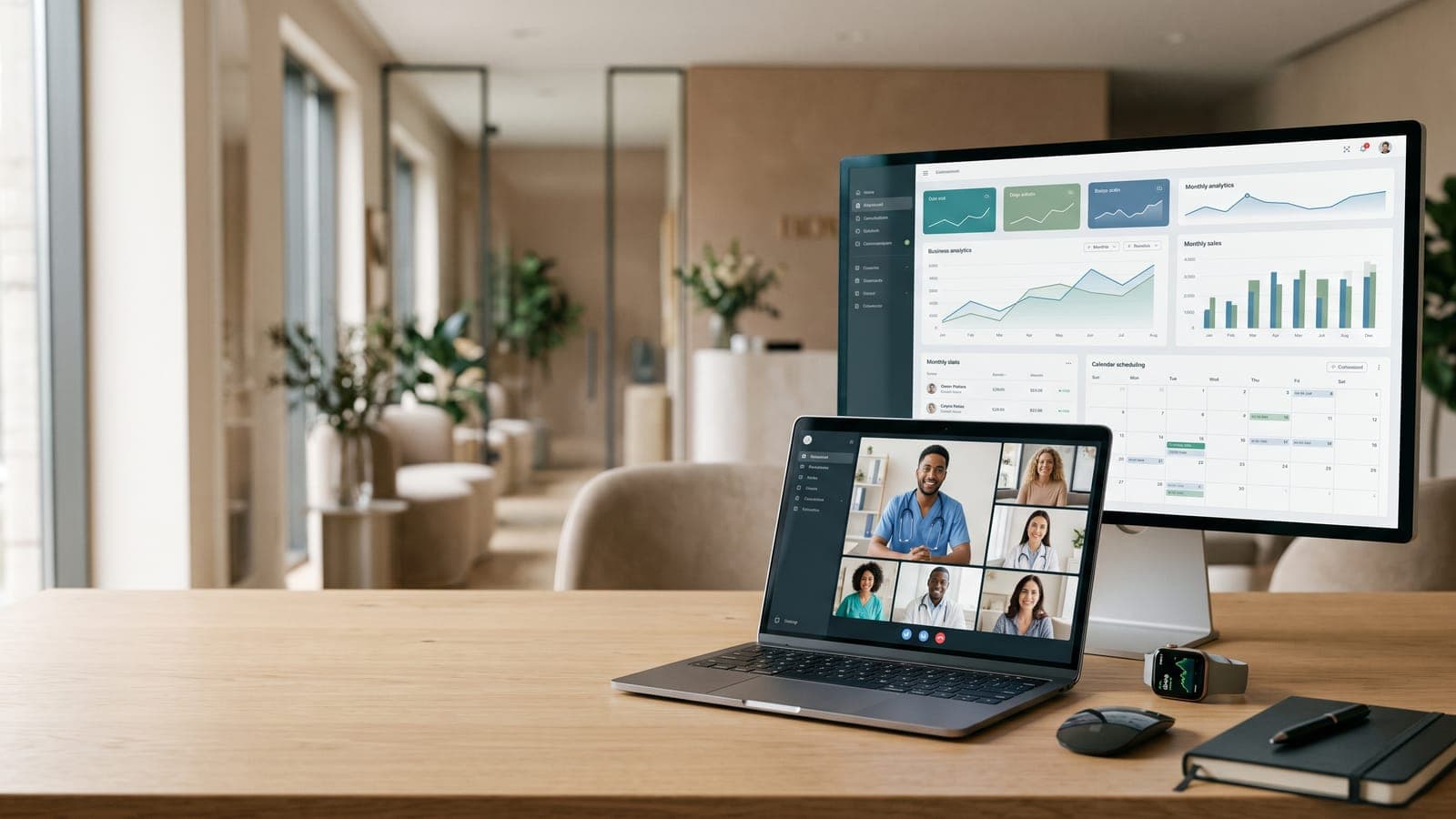
Calculating KPIs by hand from spreadsheets is slow and error-prone. MedClinora's basic and advanced reporting draws on booking, payment, and client data that's already in the system, and features like appointment reminders, the smart waitlist, and online booking help improve the numbers you're tracking. See the features page for what's included.
What are the most important KPIs for a med spa?
For most clinics, schedule utilization, revenue per treatment-room hour, rebooking rate, client retention, and no-show rate give the clearest picture. Add others as your reporting matures.
What is a good rebooking rate for a medical spa?
It varies widely by service mix and client base, and published benchmarks are often unclear about their sources. Measure your own rate consistently, set a target based on your history, and track the trend.
How often should a med spa review its KPIs?
Weekly for operational numbers like utilization and no-shows, and monthly for revenue, retention, and marketing KPIs. A quarterly review against your business plan helps with bigger decisions.
The right med spa KPIs turn guesswork into clear decisions. Start with a handful, measure them the same way every month, and act on what they show. For context, see how KPIs feed into your medical spa business plan.
Sources and further reading
General information only. This article is educational and isn’t legal, tax, financial, or clinical advice. Requirements depend on your province, your professional college, your role, and the treatments you offer — confirm them with the relevant regulator or a qualified adviser.