Small Aesthetics Practices
Solo Injector Scheduling: Managing Bookings Without a Receptionist
How solo injectors can manage bookings without a receptionist: self-booking, reminders, message routines, and policies that protect your treatment time.

Key takeaways
- Let clients book themselves online, within rules you set, so you aren't answering booking messages between treatments.
- Automate confirmations and reminders, and give clients an easy way to cancel or reschedule on their own.
- Check messages at set times each day instead of replying mid-appointment, and tell clients when to expect a reply.
- Protect admin time in your calendar the same way you protect treatment time.
When you work alone, you are the injector, the front desk, the bookkeeper, and the cleaner. Every booking message that arrives mid-treatment pulls your attention away from the client in front of you. Learning how solo injectors can manage bookings without a receptionist is mostly about moving routine scheduling work out of your hands and into a system clients can use on their own.
This guide sets out a solo injector scheduling routine that keeps your calendar full and your treatment time uninterrupted, without hiring help before you're ready.
Why scheduling eats a solo injector's day
The appointments themselves aren't the problem. It's everything around them: back-and-forth messages to find a time, reminders sent by hand, clients who forget, and last-minute gaps you try to fill by scrolling through old conversations. None of it is difficult, but it adds up and it happens at the worst moments.
- Booking requests arrive across text, Instagram, email, and phone, with no single list.
- Finding a time often takes several messages each way.
- Reminders depend on you remembering to send them.
- Cancellations leave gaps you only notice when the client doesn't arrive.
- Client details end up in your personal phone instead of a proper record.
Set up online booking that follows your rules
Online booking is the biggest single time saver for a solo practitioner. Clients see real availability and book in a minute; you stop playing message tennis. The key is configuring it so the calendar still works the way you want.
Booking rules worth setting
- Service lengths that include time to set up, clean, and write notes.
- Buffers between appointments, especially after longer treatments.
- A minimum notice period, so nobody books for 20 minutes from now.
- Consultation-first rules for new clients or for treatments that need assessment.
- Limits on how far ahead clients can book.
- Blocked time for admin, breaks, and lunch.
If you're new to this, our guide to setting up online booking for a small aesthetics clinic walks through each setting.
Let reminders and confirmations do the chasing
Automated reminders do the job a receptionist would do with a phone call, and they never forget. Time the main reminder so clients can still cancel within your notice period, giving you a chance to refill the slot.
- Send a booking confirmation straight away, with the address, preparation notes approved by you, and a link to forms.
- Send a reminder before your cancellation deadline, with a link to confirm, cancel, or reschedule.
- Keep text reminders discreet: clinic name, date, and time, without naming the treatment.
- Text clients only where they've agreed to it and haven't opted out.
For a fuller system, see how to reduce no-shows at your medical spa.
Batch your messages instead of answering live
Clients don't need an instant reply; they need a reliable one. Choose two or three set times a day to clear messages, and say so clearly on your website, your booking page, and your voicemail.
- Pick message windows, such as before your first client, at lunch, and at the end of the day.
- Bring enquiries into one inbox where possible, rather than checking four apps.
- Save reply templates for common questions: prices, booking links, preparation, and aftercare contacts.
- Send booking requests straight to your online booking link instead of negotiating times by message.
- Flag anything clinical for a proper response, and never give treatment advice in a quick social reply.
Fill gaps without chasing clients
Last-minute cancellations hurt more when you work alone, because each empty slot is your own income. A waitlist lets you offer the time to clients who've already said they want an earlier appointment.
- Ask clients who can't get their preferred time whether they'd like to join a waitlist.
- Record which service they want and when they're free.
- When a slot opens, offer it to several suitable clients at once and book the first to confirm.
- Rebook returning clients at the end of each visit, where a follow-up is appropriate, so fewer bookings rely on reminders at all.
Protect your admin time
Without a receptionist, admin still has to happen somewhere. If it isn't scheduled, it gets squeezed into evenings. Block it in your calendar so online booking can't fill it.
A weekly admin block covers
- Completing any outstanding treatment notes and photo uploads.
- Reviewing next week's bookings and unsigned forms.
- Checking stock and placing orders.
- Reconciling payments and sending receipts.
- Following up with clients who are due a review or rebooking.
Our guide to admin for solo aesthetics practitioners has more ideas for keeping the paperwork under control.
How software can help a solo injector
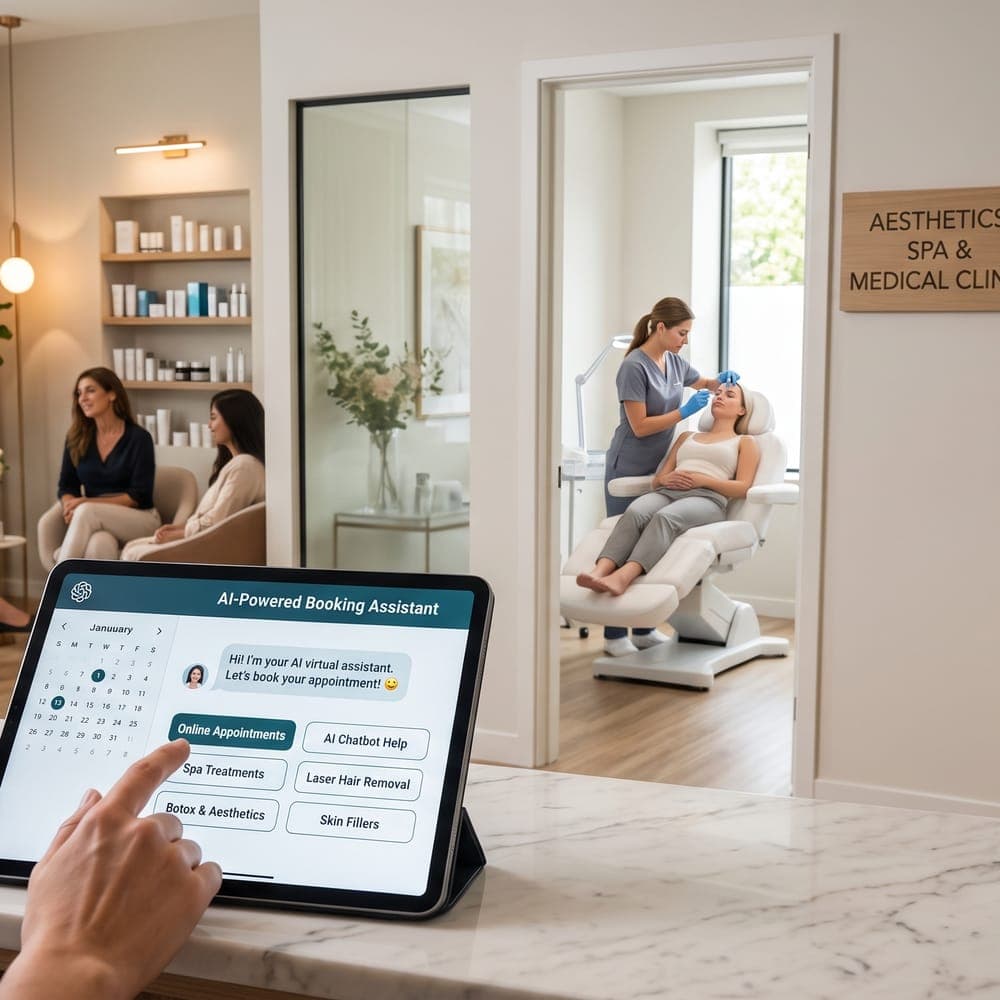
In MedClinora, a solo injector can offer online booking with service rules, send appointment reminders by email (and by text where SMS is set up and the client hasn't opted out) with confirmation links, collect digital forms before the visit, run a smart waitlist, and manage enquiries in a team inbox with website live chat. On plans that include it, an AI chat or booking assistant can answer routine questions and help clients book, handing anything else, including anything clinical, over to you. See the features page for details.
When it's time to hire help
Automation stretches a solo practice a long way, but not forever. Signs you may need help include turning away bookings, falling behind on notes, or spending more hours on admin than on treatments. When that happens, read hiring your first employee at a small aesthetics clinic.
A useful middle step is part-time cover: someone who handles messages and check-in on your busiest days only. Because your bookings, forms, and client notes already live in one system, a part-time helper can pick up where you left off without a long hand-over.
How do solo injectors handle phone calls while treating clients?
Most let calls go to a voicemail that points callers to the online booking link and states when calls are returned. They then return calls in set message windows rather than interrupting treatments.
Should I let new clients book Botox online without a consultation?
Many injectors require new clients to book a consultation first, or to book a combined consultation and treatment slot, so there's time for assessment and consent. Decide based on your clinical judgement and any requirements from your college or medical director.
What's the best way to take deposits without a receptionist?
Take them during online booking through a connected payment processor, with your deposit and cancellation policy shown before the client confirms. That way no one has to collect card details by phone.
Can an AI assistant replace a receptionist for a solo injector?
It can handle routine questions and some bookings, but it shouldn't give clinical advice, and it needs a clear hand-over to you for anything it can't answer. Treat it as support for your front desk work, not a replacement for your judgement.
Running a solo practice without a receptionist works best when clients can help themselves and you deal with messages on your schedule, not theirs. Start with online booking and reminders, then add a waitlist and message routines. For related reading, see when to remind Botox clients to rebook.
Sources and further reading
General information only. This article is educational and isn’t legal, tax, financial, or clinical advice. Requirements depend on your province, your professional college, your role, and the treatments you offer — confirm them with the relevant regulator or a qualified adviser.