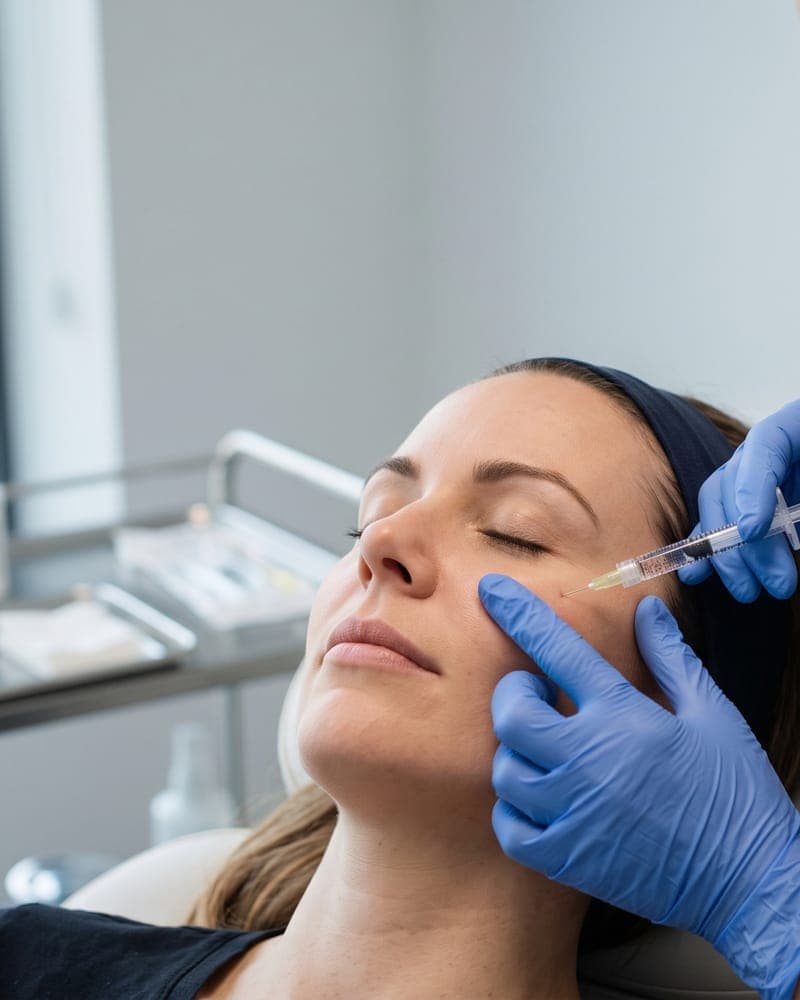
Botox and Injectables Clinics
Botox Pricing Per Unit vs Per Area
Botox pricing per unit vs per area: how clinics decide, the pros and cons of each model, how to explain prices clearly, and what to check before you publish.

Key takeaways
- Per-unit pricing is transparent about product used; per-area pricing is simpler for clients to understand up front.
- Neither model is right for every clinic — the best choice depends on your clients, your injectors, and how you quote.
- Treatment amounts are always the treating professional's clinical decision, never something set by the price list.
- Whatever you choose, explain it clearly before treatment and keep advertising within Health Canada and college rules.
Few questions come up more often at injectables front desks than "How much does it cost?" — and few are harder to answer in one sentence. The debate over Botox pricing per unit vs per area is really about how clinics decide to balance transparency, simplicity, and fairness. This guide walks through both models, their trade-offs, and how to explain whichever you choose.
It's written for clinic owners and managers in Canada. It doesn't recommend specific prices, and any figures below are illustrative examples only. Your costs, market, and clinical team will determine what works for you.
How per-unit Botox pricing works
With per-unit pricing, the client pays a set price for each unit of product used, plus any separate consultation or service fees your clinic charges. The final cost depends on the amount the treating professional decides is appropriate after assessment.
Advantages
- Transparency: clients can see exactly what they're paying for.
- Flexibility: the price reflects what was actually used, whether that's more or less than average.
- Consistency across areas: one rate applies regardless of the treatment area.
Disadvantages
- Uncertainty up front: clients can't know the total until after assessment.
- Unit-shopping: clients may compare per-unit rates between clinics without comparing experience or service.
- Pressure on the conversation: some clients may question the amount recommended, which the professional then needs to explain.
How per-area Botox pricing works
With per-area pricing, the clinic charges a set fee for each treatment area, regardless of the exact amount used. Clinics using this model typically define their areas clearly and may set separate prices for different areas.
Advantages
- Simplicity: clients know the price before they arrive.
- Easier marketing of services: a clear service menu is simpler to present (within advertising rules).
- Less focus on numbers: the conversation centres on goals and areas, not units.
Disadvantages
- Margin variability: the clinic absorbs the difference when more product is needed.
- Perceived unfairness: clients who need less may feel they're overpaying.
- Definition disputes: what counts as one area must be clear to avoid disagreements.
How clinics decide between per unit and per area
There's no universally correct answer. Most clinics weigh a few practical questions:
Questions to ask
- Do your clients value up-front certainty or precise transparency more?
- How variable are treatment amounts across your client base, according to your injectors?
- How does your local market typically present prices, and how do you want to differ?
- Can your team explain the chosen model consistently and confidently?
- Does your booking and payment system handle the model cleanly at checkout?
- How will review appointments and any touch-ups be priced under this model?
Some clinics use a hybrid: a per-unit rate as the basis, with typical ranges explained for common areas, or per-area prices with stated limits. Hybrids can work well, but only if they're easy to understand. For a broader pricing framework, see how to price medical spa services.
Common hybrid approaches
- Per unit with guidance: a per-unit rate, with the professional giving a cost estimate after assessment and before treatment.
- Per area with a defined scope: a set price per area that states what the area covers, with any additional treatment priced separately.
- Separate consultation fee: a consultation charge that is credited to treatment if the client goes ahead, under either model.
- Treatment plans: a plan agreed after consultation that sets out the expected visits and costs for the client in writing.
Whichever structure you adopt, test it on a few real scenarios before launch. Ask your front desk to explain it to a colleague who plays a client, and ask your injectors whether it ever puts them in an awkward position. If the explanation needs more than a couple of sentences, simplify.
Build the price from your real costs
Whichever model you choose, the price needs to cover more than the product. A simple cost build-up includes:
- Product cost, including wastage and expiry.
- Practitioner time for consultation, treatment, documentation, and review.
- Consumables and supplies.
- A share of rent, insurance, software, and administration.
- Payment processing fees.
- Your target margin.
Communicate Botox pricing clearly
Pricing complaints usually come from surprise, not the price itself. Make sure clients understand the model before treatment.
- Explain how pricing works on your website and in booking confirmations.
- Have the treating professional confirm the expected cost after assessment and before treatment, and record that the client agreed.
- Explain what's included — consultation, review appointment, touch-ups — and what isn't. Our guide to setting a Botox touch-up policy covers this.
- Train front desk staff to explain the model without quoting clinical amounts.
- Give an itemised receipt.
If you change models, tell existing clients before their next appointment rather than at checkout. A short, honest explanation — what's changing, why, and what it means for a typical visit — avoids most of the friction. Update your website, confirmations, and staff scripts on the same day so clients don't hear different stories from different places.
Review the model after a few months. Look at how often quotes changed after assessment, how many pricing questions the front desk handled, and whether margins held up across different treatment amounts. Your medical spa KPIs should include revenue and margin by service so these comparisons are easy.
Advertising prices within the rules
Advertising prescription drugs to the public is restricted in Canada by Health Canada (opens in a new tab), and regulatory colleges have advertising standards that may address price promotions, discounts, and comparative claims. Check the current rules before publishing prices that name a prescription product, and get advice if you're unsure. Consumer protection rules also apply to how prices and fees are presented; Consumer Protection Ontario (opens in a new tab) is a useful starting point.
How software can help
MedClinora supports invoices and payment records, treatment plans and packages, and reporting that shows revenue by service — useful when you're comparing how a pricing model is performing. See the features page.
Is it better to charge for Botox per unit or per area?
Neither is universally better. Per-unit pricing is more transparent about product used; per-area pricing gives clients certainty up front. Choose the model your team can explain clearly and that covers your costs across the range of treatments your injectors provide.
Why do Botox prices vary so much between clinics?
Prices reflect each clinic's costs, location, practitioner experience, what's included (such as reviews), and pricing model. Comparing a single per-unit rate rarely tells the whole story.
Can we advertise Botox prices in Canada?
Advertising prescription drugs to the public is restricted by Health Canada, and colleges have their own advertising standards. Check the current rules and get advice before publishing prices that name a prescription product.
Should the front desk tell clients how many units they need?
No. The amount is a clinical decision for the treating professional after assessment. The front desk can explain how pricing works and that the professional will confirm the cost before treatment.
The per-unit versus per-area debate matters less than doing either well: price from your real costs, explain the model before treatment, and keep advertising within the rules. For related reading, see how to manage appointments and follow-ups at a Botox clinic.
Sources and further reading
General information only. This article is educational and isn’t legal, tax, financial, or clinical advice. Requirements depend on your province, your professional college, your role, and the treatments you offer — confirm them with the relevant regulator or a qualified adviser.